

Part 1: The Good Was Already There
Part 2: The Coherence Was Already There
Part 3: The Blueprint Was Already There
Part 4: When Divine Love Takes Social Form
Part 5: When Love Becomes Social Architecture
Part 6: When Love Becomes People Power
PART ONE, The Good Was Already There
“I’m Already Doing It!”
I wasn’t expecting that answer. It was 2005, and I was calling some of the key people involved in food and agriculture across Northern Nevada. For several years, our community work had been evolving from what we called a Local Living Economy Network toward another more focused sector: local food. We were asking where our food came from, whether our region could feed itself, and how we might strengthen relationships among growers, restaurants, markets, institutions, and families.
My first call was to the owner of one of the oldest farms near Fallon, Nevada. His family had been farming there for five generations. I already knew him through our Buy Local work, and he was also a small-business counselor. If anyone understood both farming and the local economy, I thought, he would.
I asked what he thought about creating a Local Food System Network. “I’m already doing it!” he replied.
That stopped me. “Okay,” I said. “Pretend you’re an eagle flying over your network. What would you see?” He described the farmers and ranchers he knew. Then I asked about other parts of a local food system. Farmers’ markets? No. Community-supported agriculture? No. Farm-to-table restaurants? No. Most of his crops, in fact, were being sold outside the region.
He certainly had a network, and an important one. But it was one part of a much larger ecosystem whose other parts were largely invisible from where he stood. I asked whether he would be interested in meeting some of those other people and seeing what might happen if we connected their worlds. He said yes.
That thirty-minute conversation became the first step toward what eventually became the Northern Nevada Local Food System Network.


For years I interpreted “I’m already doing it” as resistance. Only much later did I understand that he had been telling me something far more important. He really was already doing it. And so was almost everyone else, from where they stood.
The Good Was Already There
As I became more deeply involved in community work, I found no shortage of people trying to make the world better. Farmers were producing food, small-business owners employing people, churches feeding families, nonprofits helping people through crises, environmentalists protecting watersheds, civic groups organizing neighborhoods, activists fighting injustice, and public servants trying to make systems work.
The problem was not an absence of goodness. Much of that goodness simply lived in separate worlds. Local-food people knew local-food people. Businesspeople knew businesspeople. Faith communities had their circles. Progressives organized with progressives, conservatives with conservatives.
The good was everywhere, yet much of it remained invisible to others doing good.
At one of our first large food-system gatherings, nearly a hundred regional leaders came together. The director of the local food bank stood and said something that stayed with me: she had wanted something like this for ten years. She simply hadn’t had the time to do it.
She didn’t lack vision or commitment. She was busy running a food bank. I began seeing the same paradox everywhere: the more responsible people are for the good work already in front of them, the less capacity they have to see and connect with the good beyond it. The pastor has a congregation. The farmer has a farm. The entrepreneur has customers and employees. The activist has a cause.
Everybody is already doing it.
So who tends the space between them?
The Separation I Carried Within
I could tell this story as though I were the enlightened connector who saw the silos everybody else had missed. But that isn’t what happened. Some of the most important boundaries I discovered were inside me.
One involved Christianity. I had developed a real antipathy toward it, shaped by what I had observed in American culture and politics and by my own assumptions and experiences. Eventually I had to acknowledge something uncomfortable: I was prejudiced.
The irony was difficult to miss. I already considered myself a follower of Jesus, yet as a progressive, left-leaning community networker I had largely left Christian churches out of the networks I was building. I was trying to connect the community while placing one of its largest communities inside a category that kept it at a distance.
Looking back, I can see that my own blind spot was part of something larger. I had absorbed a cultural habit of separating the spiritual from public life. While writing this book, I spoke with someone in a county government about the virtues underlying healthy community life and local food systems. When I mentioned Love, she laughed.
Love simply didn’t sound like something that belonged in serious civic work.
I had seen this separation for years. Community, business, and government leaders often kept their deepest spiritual convictions private. I remember a leader in the network-weaving movement telling me she kept her spiritual life private because she didn’t want it to be divisive. I understood the impulse. Yet in trying to create inclusive spaces, we had quietly learned to leave one of the deepest parts of ourselves outside the room.
And I had done it too.
I considered myself open-minded. I was interested in Indigenous spirituality, Buddhism, mystical traditions, science, systems thinking, and other ways of understanding reality. Yet I was judging an enormous spiritual tradition, and billions of my fellow human beings, through assumptions I had barely tested.
So I began engaging with Christian communities instead of treating Christianity as an abstraction. I visited churches, talked with pastors, and formed relationships with people whose beliefs and language sometimes made me uncomfortable. At lunch with an evangelical Christian friend, I noticed myself tightening as he spoke. I disagreed with some of what he was saying and wanted to correct him.
Then I noticed the loving intention beneath his words, our shared concern for the community, and the person sitting across from me.
The disagreement didn’t disappear, but for a moment it stopped defining the relationship. I could see him again, not primarily as an evangelical or conservative, but as a fellow human being whose ideas differed from mine and whose desire to serve the community did not.
I began to understand that the Culture of Separation shapes what we see, often without our realizing it. It had shaped me too. The farmer could see his agricultural network but not the larger food ecosystem. I was doing something similar with people: seeing the part before the whole. I thought I was seeing them clearly, but I wasn’t.
I was seeing categories first: Christian or secular, left or right, business or nonprofit. I could see “Christian” before I fully saw the person and the larger community we already shared. I was beginning to realize that the Culture of Separation had not only shaped the institutions around me.
It had shaped the way I saw the world.
Trying to Change the System from Within
I soon encountered another dimension of the same problem as an executive director in the nonprofit world. In 1997, I was recruited to lead the San Diego Food Bank, a 100,000-square-foot operation with twenty employees and hundreds of organizations depending on us for food. I arrived with an ambitious mission: I wanted to help end hunger in San Diego County.
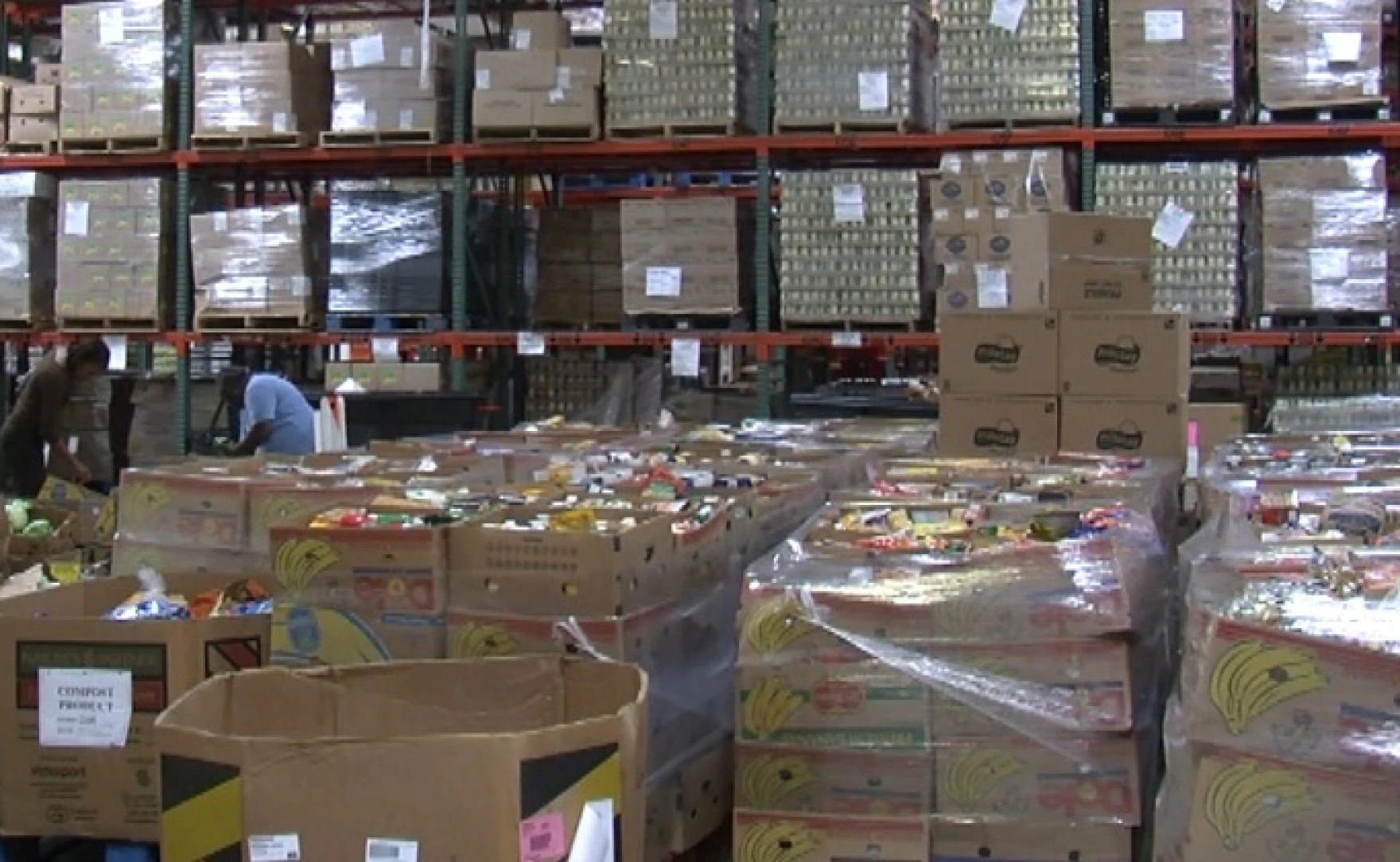
At my first team meeting, I asked, “How many of you believe we can end hunger in San Diego County?” One hand went up. Only one of twenty employees believed it was possible. We had become extraordinarily good at alleviating hunger without seriously asking what it would take to eliminate it.
We did good work, distributing enormous amounts of food through churches, shelters, and nonprofits. I pushed toward empowerment and self-reliance, but an uncomfortable question remained: were we ending hunger, or becoming increasingly effective at managing it?
I was surrounded by good people doing good things, yet funding structures, bureaucratic interests, and organizational incentives made fundamental change extraordinarily difficult. Eventually I left, drawn toward economic empowerment as a way of addressing hunger closer to its roots.
I became director of the Nevada Micro-Enterprise Initiative, helping low-income entrepreneurs gain skills, financing, and economic agency. The impact could be transformative: one client who had once been homeless eventually became a caterer for events at the Governor’s residence. But another limitation soon became clear.
We could help someone start a business, but without a supportive community and economic ecosystem around them, they were largely on their own.
Different nonprofit. Different strategy. Same underlying constraint: good people doing good work inside structures that limited what they could accomplish together. I experienced it simply as good people and organizations bumping against the limits of the structures through which they were trying to serve.
I was frustrated.
I hadn’t come to manage decline. I had come to ignite transformation.
Yet institutional constraint was only part of the puzzle. Even communities with deep relationships, shared purpose, and a spiritual foundation could remain separated from the larger whole.
Islands of Coherence
Years later, in Jerusalem, I encountered another version of “I’m already doing it.” I was staying at a Catholic facility created for Christian and other pilgrims and got to know the priest who directed it. We connected easily. Both of us understood our lives in terms of our individual calling, and both believed that God calls us toward love and service.
His work wasn’t narrowly Catholic. He worked with Protestants and Orthodox Christians and was involved in projects serving a wider community. As I described my hope of building bridges among separated groups, he responded with those familiar words: “I’m already doing it.”
This time I couldn’t explain the response by saying someone had failed to discover the spiritual foundation of community. He was a priest. His tradition already contained the pattern I was talking about: Love God. Love your neighbor. Serve others. Care for the poor. Seek reconciliation. Become one body. And, more importantly, in his own way, he was doing it.
The encounter forced me to refocus my question. Perhaps the issue wasn’t whether people understood service, or even whether they recognized a transcendent source of Love. Perhaps the deeper problem was that we create genuine connection and coherence within our own communities while remaining separated from other communities doing much the same thing.
We create, in effect, islands of coherence in a culture of separation.
Churches, movements, nonprofits, businesses, political groups, regenerative communities, and spiritual communities can all possess deep coherence. But the identity that creates belonging can also create an invisible boundary around it. Strong communities can become remarkably coherent within themselves while struggling to recognize the good beyond their boundaries. Each sees a piece of the puzzle. None sees the whole picture.

I began seeing versions of this pattern in very different worlds, and in myself. As a progressive organizer, I had often conflated the dominance of large corporations and governments with local, small business itself. Only after becoming a small-business owner did I see how crude that category was. Main Street businesses were not simply miniature versions of the oligarchic institutions I opposed; they were part of the fabric of their communities.
Then the symmetry became hard to miss. A national Christian organization once asked me to help create a Christian business network. In my local-economy work, some wanted a green-business network; in our local-food work, some wanted to include only organic producers. In regenerative circles, I encountered the same instinct to begin with people and businesses already committed to regeneration. The convictions differed, but the organizing logic was similar: gather those who already embody our vision of the good.
There is nothing inherently wrong with affinity. People naturally gather around shared identities, beliefs, interests, and purposes, and those relationships can create tremendous good. The problem comes when the boundary of the affinity group becomes the boundary of the good we are capable of seeing. The causes changed. The boundary kept reappearing.
I began to wonder whether separation was not merely a problem our movements were trying to solve, but something all of us, including me, had inherited from the culture that formed us. And there was another practical reality: the priest must tend his ministry, the activist the movement, the executive the organization.
This is not necessarily a moral failure; it is often simply how our world is organized.
If responsible people naturally tend the worlds entrusted to them, someone also has to tend the relationships between those worlds.
Beyond Network Weaving
I began to see bridge-building as a distinct relational social function: someone has to notice relationships hidden by the Culture of Separation and help coherent communities discover one another without asking them to surrender what makes them distinct. Bridge-builders are not called to create the good, but to help connect it.
For me, that work became part of a larger sacred act: bringing together what has been separated. The seventh-century Orthodox Christian St. Maximus the Confessor described the human vocation as one of uniting what has been divided, ultimately gathering the cosmos into unity through Love.
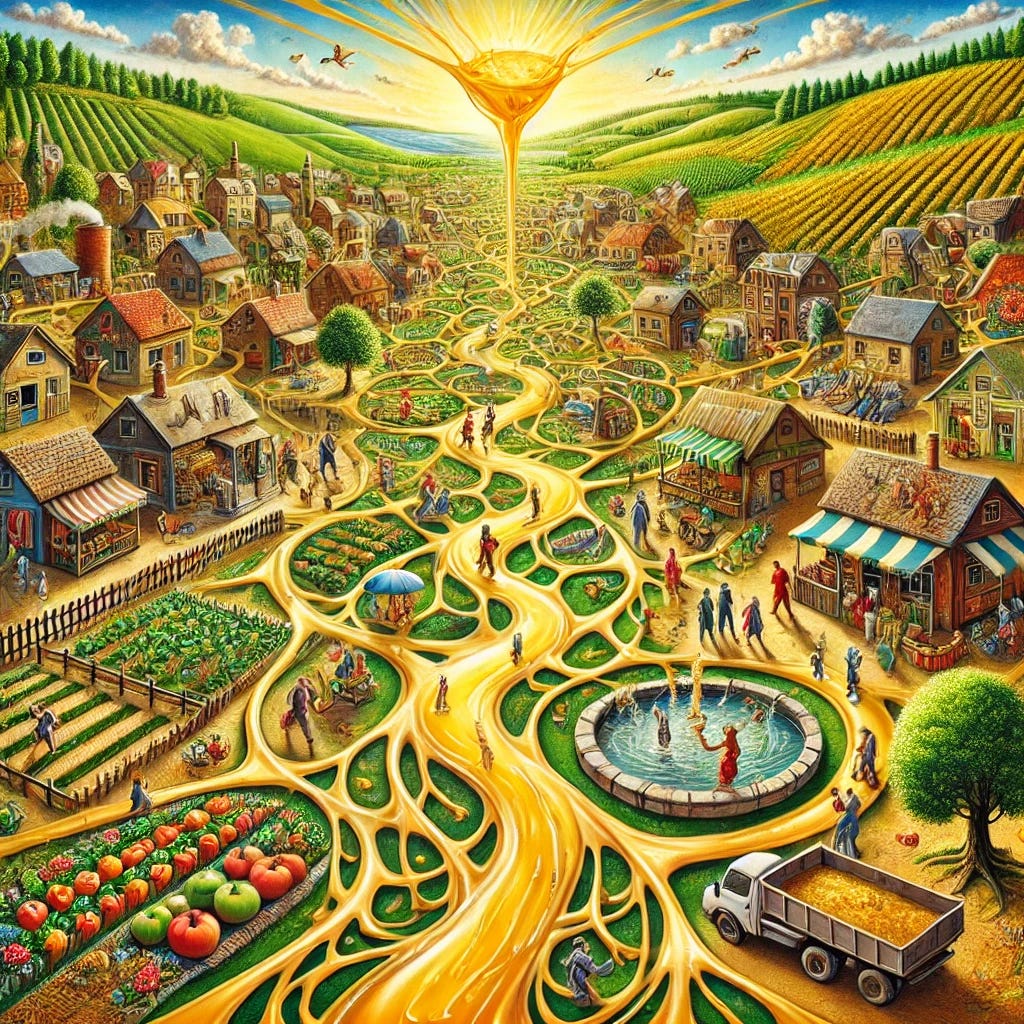
I also discovered that I was hardly alone. There is an entire field of bridge builders, network weavers, systems thinkers, and community connectors doing remarkable work. They build trust, connect organizations and projects, cultivate shared purpose, distribute leadership, and help networks become more collaborative and resilient.
Some also recognize inner transformation and a deeper interconnection underlying the work. In many ways, they had discovered the same practical necessity I had.
But that recognition pushed my question one level deeper: were we weaving coherence into existence, or learning to recognize and embody a coherence already there?
Was our work fundamentally one of invention, or discovery?
The Relationship Precedes the Network
That’s when it dawned on me that the first task is not creating coherence but recognizing it. The islands do not first have to become related; they have to recognize a deeper relationship that already precedes the network.
Many networks begin with an issue, constituency, or shared theory of change. That can be enormously valuable. But a network organized around climate, food, faith, regenerative agriculture, economic justice, or any other concern can become a coherent world whose perimeter is largely established by the issue that brought people together.
It can overcome separation within its field while leaving larger boundaries among identities, ideologies, sectors, and communities intact.
Even a vast network of networks can therefore remain an island of coherence. Networks are extraordinarily good at connecting people and organizations that already recognize themselves as related. The harder challenge is creating relationship among people and institutions that do not yet see themselves as belonging to the same field of concern.
The task is not to dissolve these islands or erase what makes them distinct, but to make their boundaries permeable to relationship.
Each network offers a legitimate window onto reality. The problem arises when we mistake the view from one window for the whole landscape. My experience kept pushing me toward a different starting point: the Christian and the Pagan are related before they agree. The conservative and progressive are related before they agree. The farmer and environmentalist are related before they discover a shared project.
Much movement building and network weaving begins with a shared issue, identity, constituency, or theory of change: gather people who resonate around that concern, strengthen relationships among them, develop cooperation, and create the coordination and structures that can carry the work. That sequence can accomplish tremendous good. My experience, however, led me toward a different starting point.
The deeper coherence does not arise because people first agree on an issue or join a network. The relationship precedes the network. We begin by recognizing a spiritual and relational coherence in which people already participate across differences of belief, identity, sector, or ideology. From that recognition, relationship and trust can deepen; trust makes cooperation possible; cooperation makes coordination useful; and structure can emerge to serve the life already present.
The Ancient Blueprint asks us first to recognize that prior relationship, a divine pattern of wisdom and relational order woven into creation.
We are not creating coherence by building the network; the network becomes one of the structures through which an already-existing relationship can become visible and actionable.
That changes both whom we connect and why.
Do We Need Another Movement?
That realization created a challenge for my own work. If fragmentation was the problem, why not create a movement dedicated to overcoming fragmentation? Because eventually that movement, too, could become another silo, with its own brand, identity, members, funding, leaders, and boundaries.
I began to wonder whether “I’m already doing it” sometimes carried another message: people may have heard me offering yet another way to build community, competing with the many ways they were already doing it. The answer was not to persuade them to join my approach, but to become clearer about what I was actually trying to do: recognize and connect what was already alive.
I had watched organizations gradually consume the attention needed to sustain themselves. Projects require funding, administration, recognition, and leadership. All of that may be necessary, but it can leave less energy for expanding relationships beyond the organization itself. I began to release the idea that the answer was one more organization to join.
That is why, in Reno, I resisted when someone suggested that our emerging food network start a community garden. People were puzzled. Why would anyone be against a community garden? It felt a little like opposing motherhood, apple pie, and kittens. But if we ran the garden, soon our meetings would be about irrigation, volunteer schedules, seeds, budgets, and who forgot to lock the shed.
All worthwhile things, but we would have become a community-garden organization.
Instead, I wanted to connect the people already growing gardens, operating farms, running restaurants, fighting hunger, selling food, and trying to build a healthier region. We didn’t need to own the projects. We needed to connect the good.
As a consequence, the food network grew. Farmers’ markets expanded. Restaurants and growers formed relationships. People who had regarded one another as competitors began acting more like colleagues. Local agriculture gained cultural legitimacy. And those community gardens we didn’t start? They appeared anyway. Dozens of projects emerged once the relationships were alive.
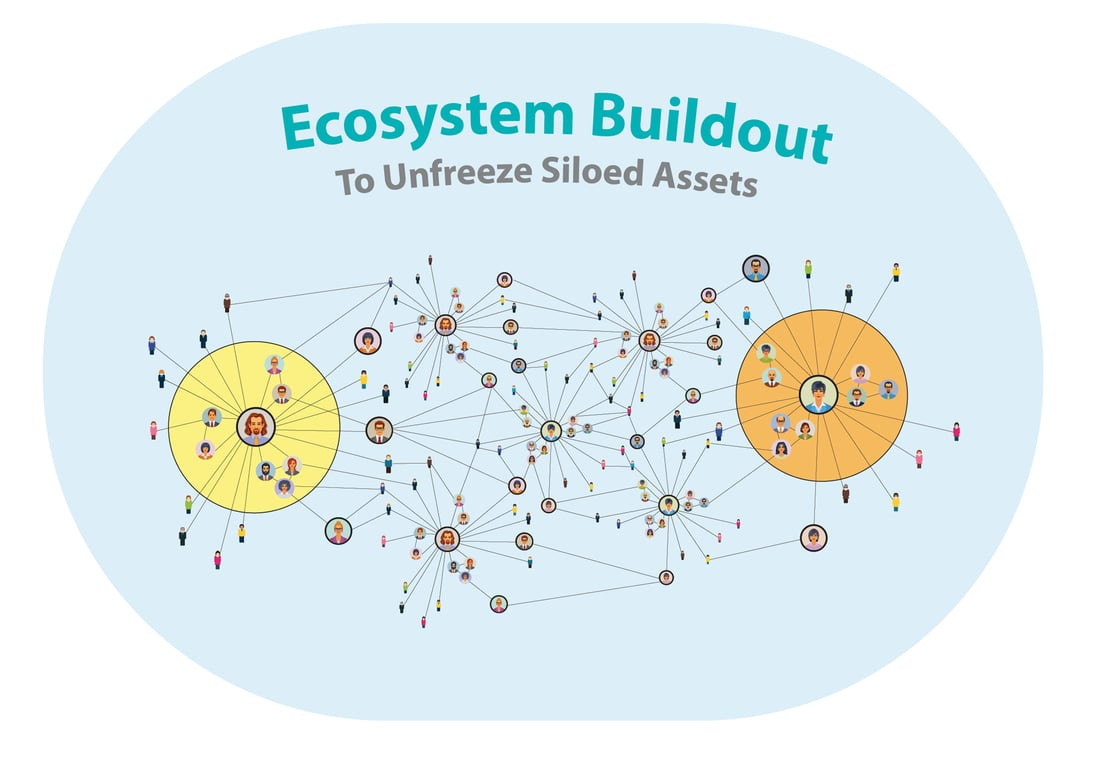
By then, I had begun to see that the good was already present, but often separated by the boundaries of our organizations, identities, movements, and worldviews.
Connecting across those boundaries could release possibilities no single organization could create alone.
But a deeper question remained: was connection simply a strategy for social change, or did it reveal something more fundamental about the nature of reality itself?
In Part Two, I go back to experiences that began long before I became a community builder, and to the spiritual journey that eventually changed how I understood what I had been seeing all along.
Part 1: The Good Was Already There
Part 2: The Coherence Was Already There
Part 3: The Blueprint Was Already There
Part 4: When Divine Love Takes Social Form
Part 5: When Love Becomes Social Architecture
Part 6: When Love Becomes People Power
To learn more about the Book click HERE, or purchase below:

This makes so much sense to me!
Thank you for your writings Richard. Can you recommend a book or two that express your spiritual values? I'm seeking to broaden my own horizons.